Records / Crown of Nothing / Song
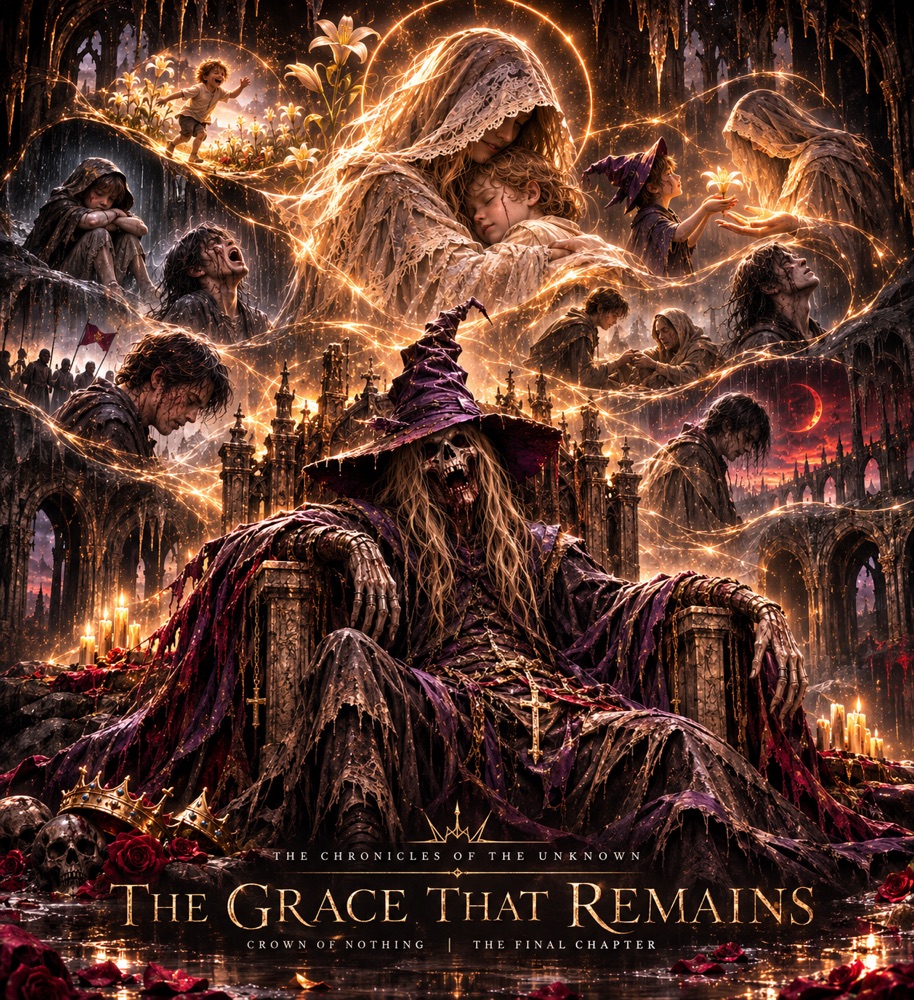
The Grace That Remains
The Blind Cannibals · From Crown of Nothing · Out now
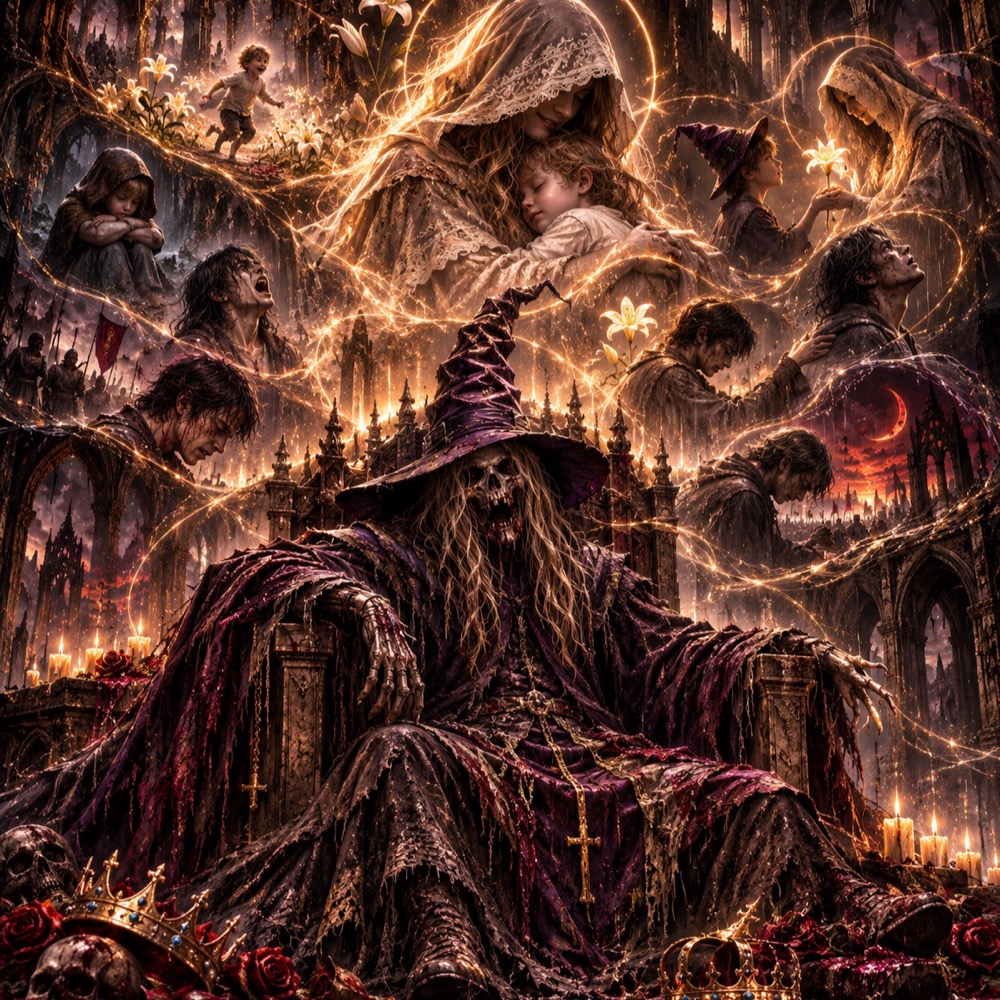
A broken crown, an empty throne. A dream of arms he once knew. A question he has carried for a very long time.
Words by Vedanta Barooah · Music by AI x Vedanta Barooah
What it’s about
About the song
“The Grace That Remains” is about discovering that the love we believe we have lost may still live within the person we have become.
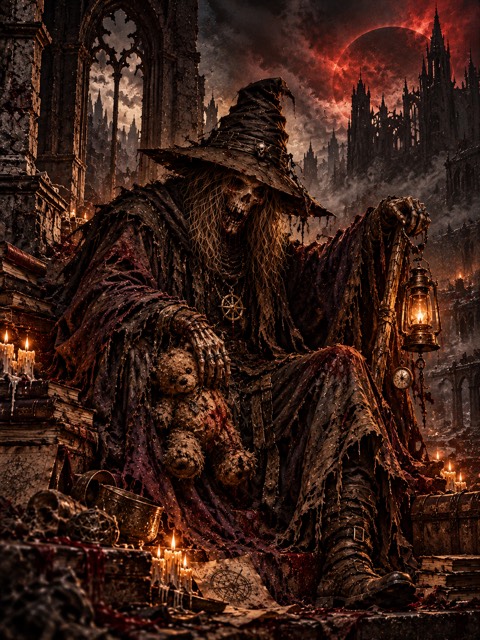
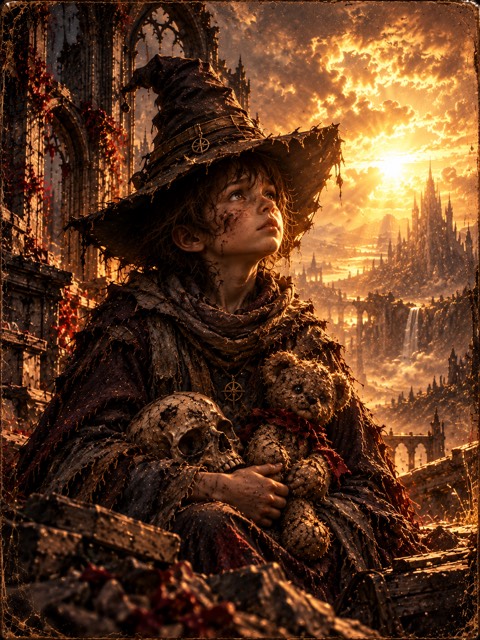
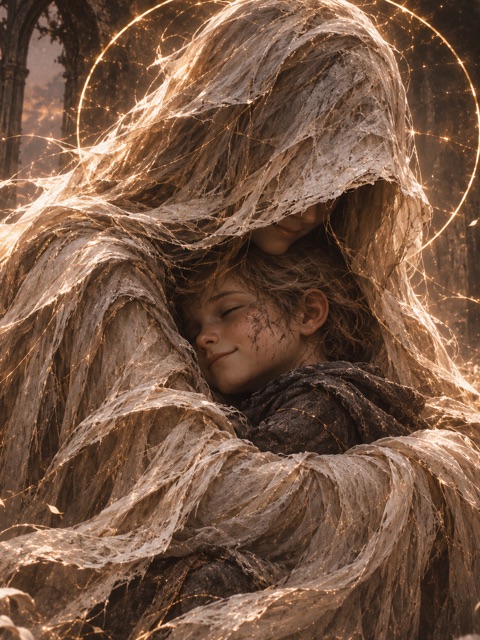
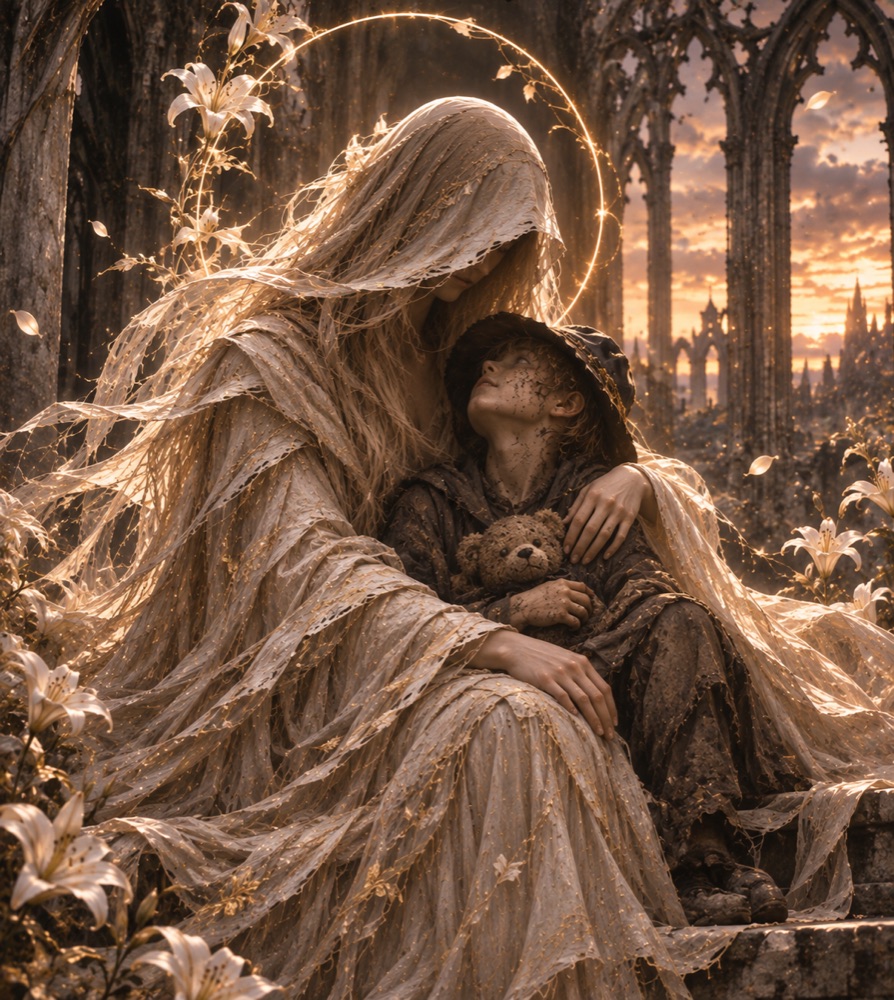
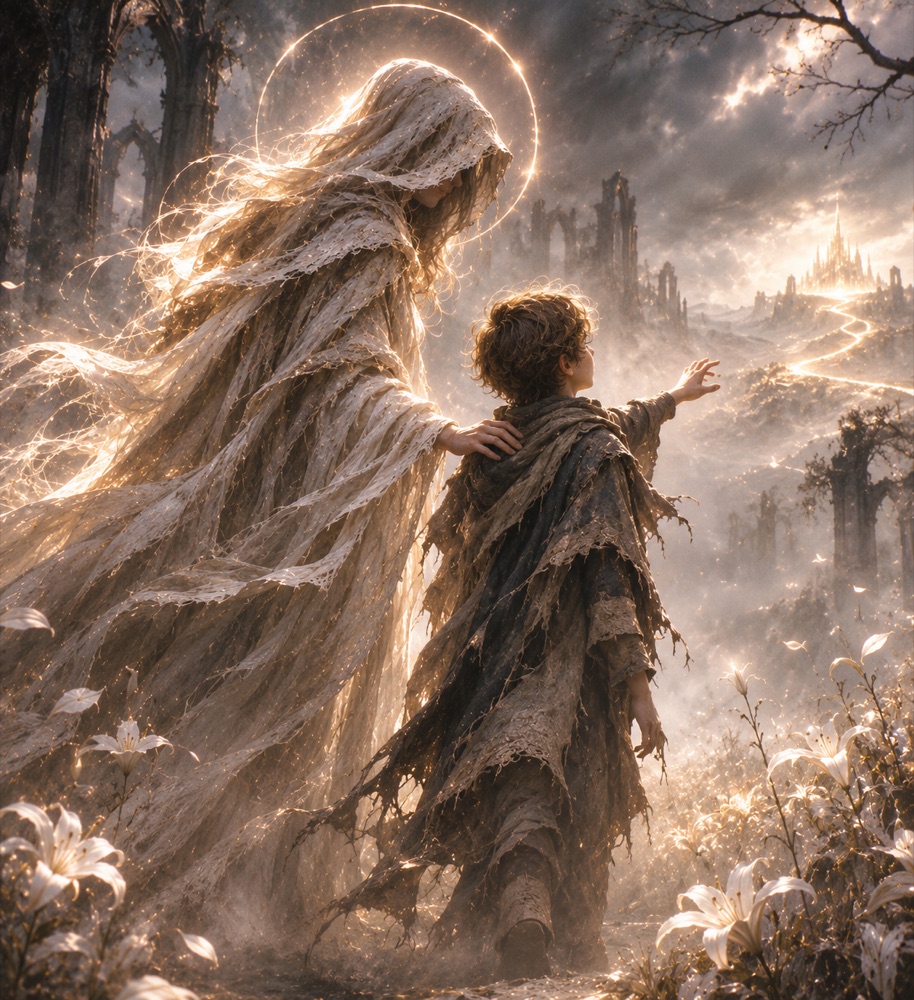
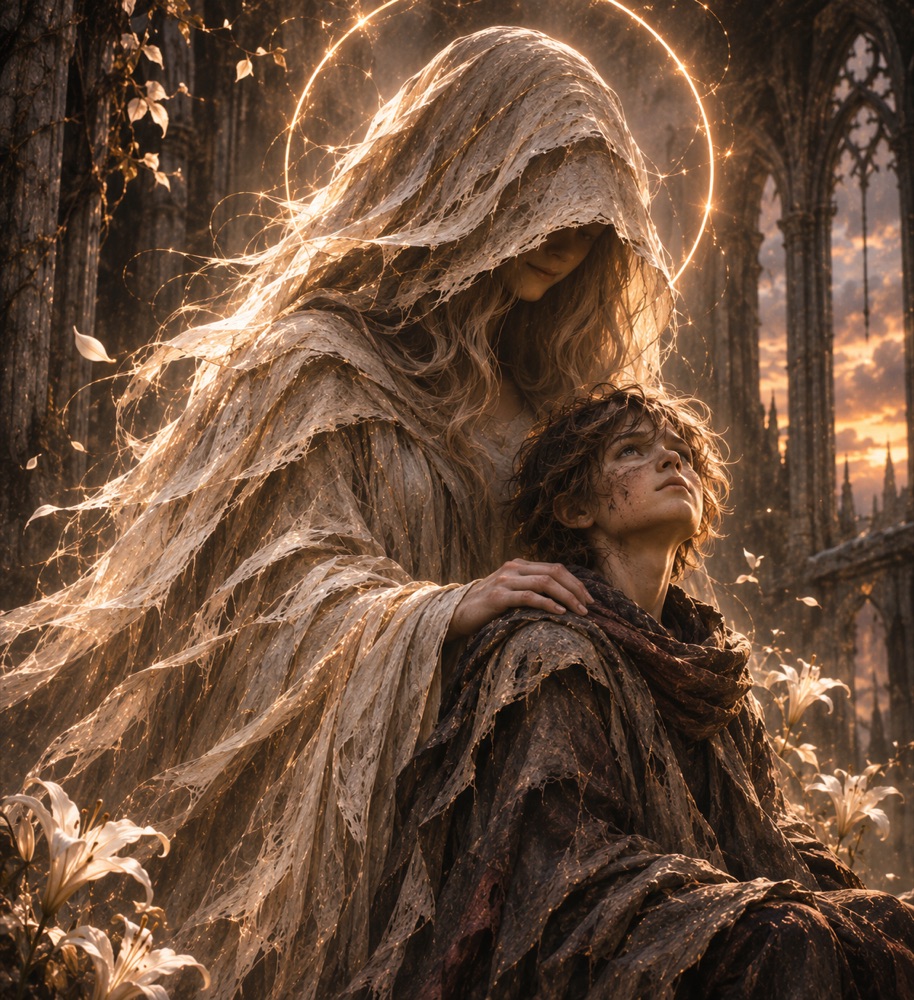
It tells the story of The Unknown, a broken and defeated figure who dreams of his childhood, when he was still The Known, and remembers the comforting embrace of The Grace.
When he awakens, he asks a question that has haunted him throughout his life:
“Why did you leave me?”
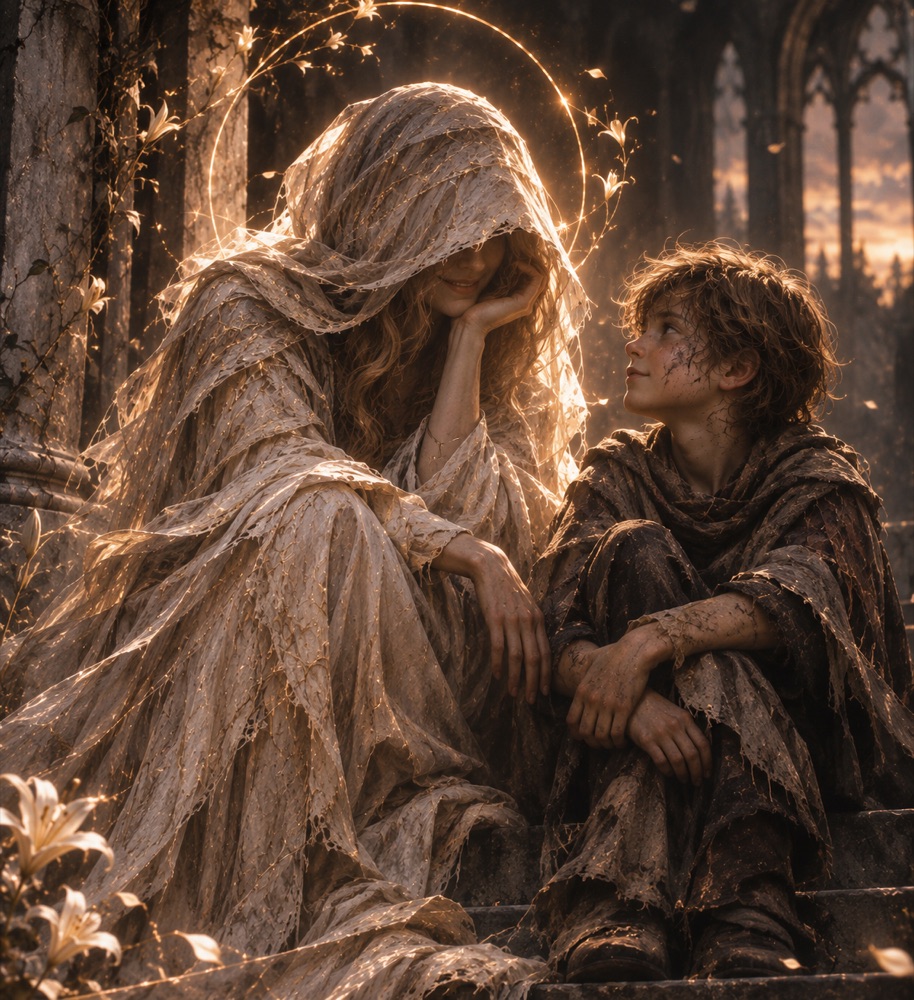
As he revisits his memories of abandonment, cruelty, suffering, and his own destructive choices, he begins to recognize something he had overlooked. Even in his darkest years, there were moments when he showed compassion, kindness, and mercy.
These were the qualities The Grace had nurtured within him.
He realizes that although she disappeared from his life, her influence never entirely did.
The song explores grief, childhood attachment, abandonment, identity, and the enduring influence of unconditional love. It also acknowledges that suffering does not excuse the harm we cause, and that rediscovering goodness does not automatically grant redemption.
At its heart is The Grace’s defining promise:
“My little one, the world may take everything I have given you. But it cannot take away what you have become.”
The ending is deliberately ambiguous. The Unknown walks into a world that remains cruel and broken, uncertain whether he is alive, dead, or dreaming. Behind him trails a nearly invisible white thread, seemingly connected to The Grace.
It is not a song about being saved. It is a song about realizing that something worth saving survived within you.
And perhaps its most important message is that we sometimes spend our lives mourning the love we lost, without recognizing how much of that love we still carry.
The words
Lyrics
Read the full lyricsI called your name through endless rain,
Through every scar, through every chain.
I lost myself, I lost my name…
But something of your grace remains.
Crown of Nothing · the final chapter
The story arc
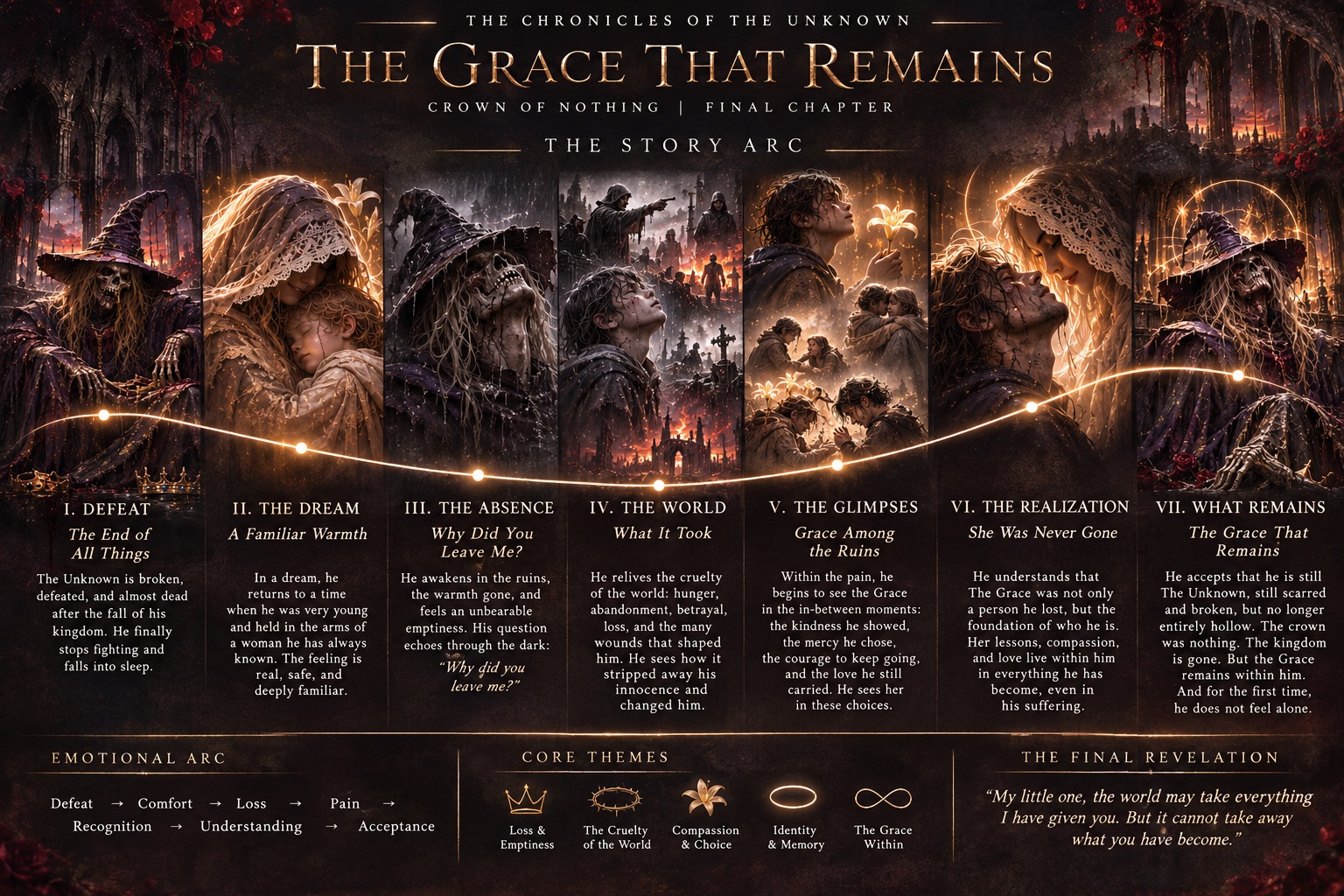
Read the story arc as text
I. Defeat: The End of All Things. The Unknown is broken, defeated, and almost dead after the fall of his kingdom. He finally stops fighting and falls into sleep.
II. The Dream: A Familiar Warmth. In a dream, he returns to a time when he was very young and held in the arms of a woman he has always known. The feeling is real, safe, and deeply familiar.
III. The Absence: Why Did You Leave Me? He awakens in the ruins, the warmth gone, and feels an unbearable emptiness. His question echoes through the dark: “Why did you leave me?”
IV. The World: What It Took. He relives the cruelty of the world: hunger, abandonment, betrayal, loss, and the many wounds that shaped him. He sees how it stripped away his innocence and changed him.
V. The Glimpses: Grace Among the Ruins. Within the pain, he begins to see the Grace in the in-between moments: the kindness he showed, the mercy he chose, the courage to keep going, and the love he still carried. He sees her in these choices.
VI. The Realization: She Was Never Gone. He understands that The Grace was not only a person he lost, but the foundation of who he is. Her lessons, compassion, and love live within him in everything he has become, even in his suffering.
VII. What Remains: The Grace That Remains. He accepts that he is still The Unknown, still scarred and broken, but no longer entirely hollow. The crown was nothing. The kingdom is gone. But the Grace remains within him. And for the first time, he does not feel alone.
Emotional arc: Defeat → Comfort → Loss → Pain → Recognition → Understanding → Acceptance
Core themes: Loss and emptiness · The cruelty of the world · Compassion and choice · Identity and memory · The Grace within
The final revelation: “My little one, the world may take everything I have given you. But it cannot take away what you have become.”
Beneath the storyThe UnseenA reading of what the song means. Leave it closed to keep the story as it is.
Some things are carried long after they are lost.
IThe DescentThe Weight of an Absence
He had survived the world, but he had not survived it unchanged.
Kingdoms had fallen. Crowns had broken. The boy who once trembled beneath the rain had become something even he could no longer recognize.
And when there was nothing left to conquer, nothing left to defend, and no strength remaining to fight, The Unknown fell asleep.
There, beneath the ruins of everything he had become, he found something he had forgotten.
An embrace.
A familiar voice.
The warmth of someone who had once held him without asking him to be anything other than a child.
For a moment, he was The Known again.
And then he awakened.
The warmth was gone. The arms that held him had disappeared. Only the memory remained.
“Why did you leave me?”
It was a question he had carried longer than he could remember.
But beneath the question lived another, one he had never dared to ask.
Was I not worth staying for?
He had mistaken absence for abandonment, and abandonment for a judgment upon his worth.
The years that followed seemed to confirm it.
Every betrayal became another reason to distrust. Every loss became another reason to withdraw. Every cruelty became another justification for becoming cruel himself.
Eventually, he could no longer distinguish between the things the world had done to him and the things he had chosen to become.
The suffering was real.
So were his choices.
And somewhere between them, The Known had disappeared.
Or so he believed.
As the memories returned, he began noticing what had once escaped him.
A piece of bread shared despite his own hunger.
A hand extended toward someone who had fallen.
A moment of restraint when vengeance would have been easier.
Small things.
Almost insignificant beside the destruction he had witnessed and caused.
Yet they troubled him.
For they belonged to the same life he had remembered only through suffering.
And within them was something strangely familiar.
Not her face.
Not her voice.
But the tenderness she had once given him.
He had spent a lifetime remembering the moment she was no longer there.
He had forgotten all the moments when something of her still was.
IIWhat Lies BeneathThe Love That Became a Part of Him
There is a peculiar cruelty in losing someone who helped shape the person we are.
We mourn their absence as though everything they gave us has vanished with them.
Their voice becomes a memory. Their face grows distant. The warmth of their presence becomes something we can recall but never quite recover.
And sometimes, grief changes the meaning of what we remember.
What was once love becomes loss.
What was once safety becomes longing.
What was once a beautiful memory becomes evidence of something the world has taken away.
For The Unknown, The Grace became inseparable from the pain of her absence.
He remembered being loved, but the memory no longer comforted him. It reminded him of everything he believed he had lost.
His question, “Why did you leave me?”, was not simply a demand for an explanation.
It was the voice of The Known, still searching for the safety he had once known.
The Shape of Love
The earliest bonds we form can influence how we understand ourselves and the world around us.
Through affection, patience, and care, we begin to learn what safety feels like, whether our needs matter, and what it means to be worthy of love.
Over time, these experiences may become part of our expectations, values, and ways of relating to others.
We carry something of those who shaped us, even when they are no longer beside us.
The Grace embodies this enduring influence.
Her tenderness helped form The Known’s capacity for compassion.
Her patience taught him that another person’s suffering deserved attention.
Her affection showed him a kind of love that did not demand obedience or repayment.
These qualities did not remain untouched by the world.
They were buried beneath fear, anger, shame, and resentment.
But buried is not necessarily destroyed.
In the smallest acts of kindness, The Unknown sometimes behaved according to lessons he no longer consciously remembered.
He had forgotten the teacher.
But not everything he had learned.
The Two Faces of Affection
This is also what separates The Grace from The Malice.
Both offer tenderness.
Both speak with familiarity.
Both may call him “my little one.”
But where The Grace nurtures the person The Known may become, The Malice seeks to preserve her hold upon him.
The Malice turns affection into obligation.
Her love must be acknowledged, repaid, and obeyed.
The Grace asks for nothing.
The distinction is not merely between kindness and cruelty.
It is between love that permits another person to exist freely and affection that requires them to remain dependent.
One gives the child a foundation upon which to grow.
The other teaches him to fear what might happen if he grows beyond her reach.
And a child who has known both may spend much of his life confusing being needed with being loved.
The Boy Beneath the Bones
The Unknown’s transformation is not simply the story of innocence destroyed by a cruel world.
It is also the story of a wounded person who made choices.
He sought power because he was afraid.
He embraced violence because he had known helplessness.
He allowed suffering to become part of his identity, until the distinction between his wounds and his actions grew increasingly difficult to recognize.
But suffering does not explain everything a person becomes.
Neither does love.
The Unknown is shaped by both, and by the choices he makes between them.
His discovery of The Grace does not undo the summoning, restore the fallen kingdoms, or absolve him of the harm he has caused.
It reveals something more difficult.
He was never made of darkness alone.
The boy who shared his bread and the figure who summoned destruction belong to the same life.
To acknowledge one is not to erase the other.
Perhaps this is the deeper burden of remembering who we were.
We must confront not only what was done to us, but also what we have done.
And we must recognize that the goodness we once possessed does not excuse the darkness we later embraced.
What Remains
The Grace’s defining words return at the moment The Unknown begins to understand:
“My little one, the world may take everything I have given you. But it cannot take away what you have become.”
Her words do not promise that he will remain innocent.
They do not guarantee that he will make the right choices.
They do not suggest that love makes someone incapable of cruelty.
They speak instead to the enduring influence of what has been given.
The Grace helped shape him.
What he did with that inheritance was never entirely hers to decide.
And perhaps that is what makes her love unconditional.
She did not love him because she knew what he would become.
She loved him before he became anything at all.
The Unknown cannot return to that childhood.
He cannot undo the years.
But he can begin to recognize that the tenderness he once received was not merely something he possessed and then lost.
It had become part of him.
IIIWhat Remains UnsaidThe Thread Beyond the Ruins
There is no resurrection.
No kingdom restored.
No great forgiveness descending from the heavens.
The Unknown awakens to a world that remains as wounded as the one he left behind.
He does not know whether he is alive.
He does not know whether he has awakened at all.
He rises.
And he walks.
Behind him trails a delicate white thread.
So faint that it might disappear if one looked too closely.
It seems to emerge from the halo of the woman who once held him.
Or perhaps it only appears that way.
The story does not tell us.
For the thread may be many things.
A memory that refuses to fade.
A love that has outlived its giver.
A connection between the child he was and the figure he has become.
Or something beyond the reach of memory and understanding.
The Unknown does not turn to see it.
Perhaps he does not need to.
Perhaps he cannot.
And perhaps the thread has always been there, following him through every cruelty, every kindness, every terrible choice, and every moment when he believed himself entirely alone.
But another question remains.
If The Grace has always been part of him, why did he become The Unknown?
Was her love insufficient?
Did he forget it?
Or is love never a guarantee against the darkness a person may choose?
The Chronicles offer no easy answer.
For The Grace is not the opposite of everything The Unknown has become.
She is part of the reason his story cannot be reduced to suffering alone.
He remains capable of cruelty.
He remains responsible for his choices.
And somewhere within him remains the influence of someone who once held a frightened child and asked for nothing in return.
Perhaps that is the tragedy.
Perhaps it is the hope.
Perhaps it is both.
The Question That Remains
Can we truly lose the love that made us who we are?
Or do we spend our lives searching for it in the world, never recognizing the ways it continues to live within us?
The Unknown walks onward.
The world has not become kinder.
The ruins have not disappeared.
And the thread remains.
Some things are carried long after they are lost.
Some things were never entirely lost at all.
From the song
Art
More of the story is still to come.

Characters